

Is Anxiety Disorder Dangerous? What to Know Before Suffering Alone Too Long | Safe and Sound
Is anxiety disorder dangerous? This is a common question when someone realizes they are experiencing excessive worry, difficulty controlling emotions, insomnia, fatigue, or frequent feelings of unease. It's important to note that anxiety disorders aren't always "dangerous" immediately, but they become a significant concern if they persist and begin to affect health, work, relationships, or daily life.
Many people suffer from anxiety for extended periods because they think they're just stressed, weak, or overthinking. This article helps you understand the dangers of anxiety disorders, how they affect your body and life, when you should take them seriously, and why seeking support at the right time can help you break free from a cycle of worry, fear, and avoidance.
How dangerous are anxiety disorders?
Whether anxiety disorders are dangerous depends on their duration, the intensity of symptoms, and their actual impact on life. Anxiety in certain situations, such as exams, interviews, work pressure, or family problems, is a normal reaction, usually has a clear cause, and subsides once the problem is resolved.
Anxiety disorders are different: feelings of worry, fear, or panic occur frequently, are prolonged, intense, difficult to control, and disproportionate to the actual level of danger. Patients may experience restlessness, insomnia, difficulty concentrating, rapid heartbeat, shortness of breath, tremors, sweating, nausea, headaches, or persistent fatigue. Therefore, anxiety disorders should not be viewed as something "terrible" to panic about, but neither should they be dismissed as simply "overthinking."
When anxiety is prolonged, the body remains in a constant state of tension.
In the short term, anxiety can be a signal that helps the body prepare for a stressful situation. Heart rate and breathing increase, and the body becomes more alert to react to what is happening. This is a natural response.
However, if anxiety persists, the body can easily enter an "alert" state too frequently. Patients may experience rapid heartbeat, shortness of breath, dizziness, nausea, muscle tension, headaches, insomnia, or general fatigue. These symptoms cause them not only mental distress but also significant physical discomfort.
The danger doesn't lie in a single instance of anxiety, but in the body being subjected to repeated stress over a long period. When patients don't sleep well, don't get enough rest, experience changes in diet, have difficulty concentrating, and are constantly tired, their quality of life gradually declines.
When fear causes patients to avoid life.
A notable manifestation of anxiety disorders is avoidance. Patients may avoid places, situations, or activities that cause them fear, anxiety, or that have previously triggered panic attacks. Initially, avoidance may provide a sense of relief by preventing them from confronting the unpleasant feeling.
But if prolonged, avoidance can lead to increasingly restricted lives. A person may gradually become reluctant to socialize, unwilling to go out, avoid crowded places, afraid to go alone, hesitant to participate in daily activities, or reject opportunities in work and study. They not only fear the feeling of anxiety, but also begin to live around how to avoid experiencing it again.
This is why anxiety disorders can be dangerous in a subtle way. They not only produce symptoms, but also change how a person makes choices, lives, and connects with others. When fear dictates a person's life for too long, they may gradually lose their sense of freedom in their own lives.
When anxiety leads to other mental health problems
Chronic anxiety disorders can be accompanied by feelings of depression, loss of interest, lack of confidence, self-doubt, or social withdrawal. Patients may feel constantly stressed, fatigued, have difficulty calming down, and frequently fear that something bad will happen.
In severe cases, anxiety can be linked to depression or dangerous negative thoughts. This doesn't mean everyone with anxiety will experience severe symptoms, but if the condition has been prolonged, significantly affecting daily life and causing increasing isolation, it shouldn't be left to suffer in silence. With proper support, patients can better understand what they are going through and find more appropriate ways to manage it.
>> See also: 7 foods that are good for people with anxiety disorders and how to use them effectively
How can anxiety disorders affect the body and life?
Anxiety disorders are not just emotional problems. When prolonged, they can affect the body, mind, work, studies, and relationships. Patients may feel unwell, easily fatigued, less productive, or withdraw into themselves due to fear.
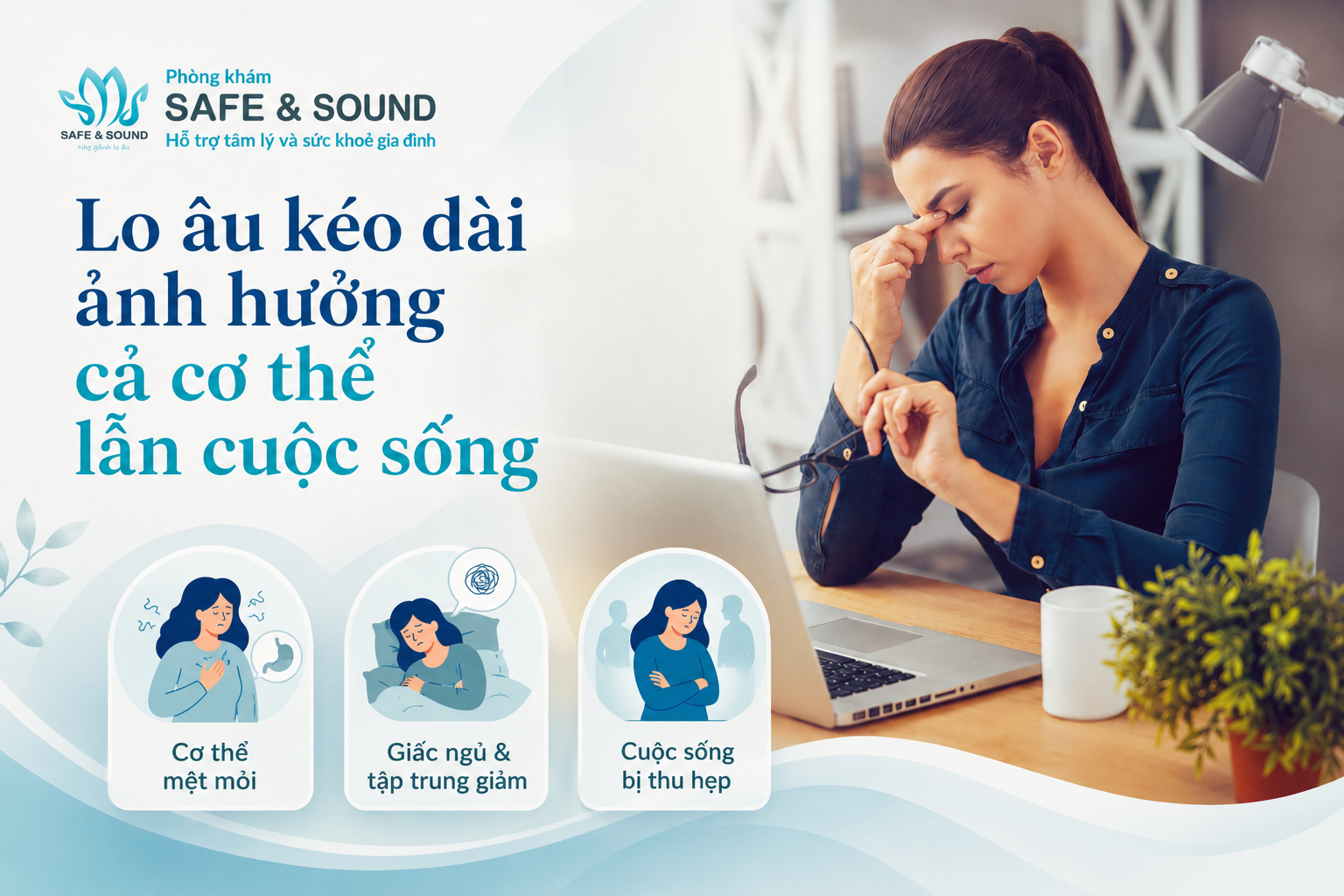
Physically, anxiety disorders can cause nervousness, rapid heartbeat, palpitations, chest pain, shortness of breath, shallow breathing, tremors, sweating, headaches, nausea, or digestive problems. Sleep is also often affected, making it difficult to fall asleep, resulting in restless sleep, frequent awakenings, or continued fatigue after sleeping. When the body is not properly restored, the ability to concentrate, remember, and regulate emotions also decreases.
Mentally and in daily life, patients may frequently experience stress, fear, lack of confidence, self-doubt, or constantly dwell on negative scenarios. In work and studies, prolonged anxiety can lead to difficulty concentrating, hesitation, fear of making mistakes, or taking longer to complete familiar tasks. Relationships can also be affected as patients may avoid social interaction, become irritable, or have difficulty explaining their condition to others.
Some people try to relieve anxiety by avoiding things or using stimulants, but these methods only provide temporary relief and can complicate the problem. Therefore, when asking whether anxiety disorders are dangerous, it's necessary to look at the overall picture: this condition is concerning when it causes physical exhaustion, mental instability, a narrowed life, and prevents sufferers from living what they want but instead living what they fear.
Differentiating the severity levels of anxiety disorders
The table below helps readers assess their own condition based on the level of impact. The table is not for self-diagnosis, but rather to help you recognize when anxiety requires more serious attention.
|
Status |
Common symptoms |
Level of impact |
How should the reader understand this? |
|
Common anxiety |
Anxiety about exams and interviews, work pressure, and family issues. |
There is a clear cause, and it gradually decreases as the problem is addressed. |
This is a common reaction, not necessarily a disorder. |
|
Persistent anxiety requires attention. |
Frequent anxiety, difficulty sleeping, fatigue, restlessness, difficulty concentrating. |
It begins to affect daily life, work, studies, or relationships. |
It should not be taken lightly; the level and context need to be monitored. |
|
Anxiety disorders have a clear impact. |
Intense anxiety, difficulty controlling emotions, panic, avoidance of situations, decreased quality of life. |
It clearly affects mental and physical health and quality of life. |
It is advisable to seek professional support to receive a proper assessment. |
|
This situation requires prompt attention. |
Anxiety is accompanied by depression, loss of interest, social withdrawal, substance abuse, or severe negative thoughts. |
Continuing to endure this could have serious consequences. |
You need to seek support from a doctor or mental health professional. |
The key is not just to ask "am I anxious?", but to ask "what is anxiety taking away from my life?". If anxiety causes you prolonged insomnia, fatigue, difficulty concentrating, social avoidance, reluctance to do everyday things, or increasing withdrawal, the level of concern is different from ordinary anxiety.
While both involve feelings of anxiety, the impact can be vastly different. Someone who feels anxious before an interview and then returns to normal is different from someone who constantly lives in a state of unease, fear, and is unable to control their thoughts. Therefore, the severity of an anxiety disorder needs to be considered in terms of its duration, intensity, and actual impact.

Misunderstandings cause many people to suffer from anxiety disorders for too long.
Many people don't seek help early not because they aren't suffering, but because they misunderstand what they're going through. The following misunderstandings can prolong anxiety disorders and make it harder to get timely support.
- Anxiety isn't immediately dangerous, but it shouldn't be taken lightly: A single episode of anxiety might not seem like a big deal, but prolonged anxiety can affect sleep, cardiovascular health, digestion, concentration, and overall quality of life.
- Positive thinking alone isn't always enough: A positive outlook can be helpful, but if anxiety is intense, persistent, difficult to manage, or avoidant, the patient needs more appropriate support.
- Anxiety is not a sign of weakness: Anxiety disorders can manifest through physical, emotional, mental, and behavioral means. Self-blame only adds to the patient's shame and delays seeking help.
- Avoidance only provides temporary relief: The more a person avoids a situation, the fewer opportunities they have to face it safely. Over time, fear can narrow their lives.
- Don't wait until it's very severe to see a professional: If anxiety has been prolonged, difficult to control, causing insomnia, fatigue, or affecting work, studies, and relationships, the patient should seek support early.
- Anxiety disorders aren't just confined to your head: Anxiety can cause rapid heartbeat, shortness of breath, headaches, nausea, muscle tension, insomnia, fatigue, or digestive problems.
- Don't suffer in silence for too long: Feeling misunderstood can make patients feel even more isolated. Being properly listened to helps them reduce self-blame and find more appropriate support.
>> See also: Is overthinking a sign of anxiety disorder?
What should you do if anxiety disorders are affecting your life?
When you suspect an anxiety disorder is affecting your life, the first thing to do isn't self-diagnosis, but rather to observe your condition more closely. You can note when anxiety occurs, how long it lasts, whether it's accompanied by panic attacks, whether it causes you to avoid certain situations, and whether it affects your sleep, work, studies, or relationships.
This observation helps you better understand what you're experiencing and prepare you better if you need to see a professional. Information such as the timing, frequency, severity, triggering context, and actual impact will make the assessment process more grounded. This isn't about self-diagnosing, but about getting the right support.
If anxiety only appears during periods of stress and subsides as the problem is addressed, you can start by taking care of your lifestyle by getting more sleep, engaging in appropriate exercise, relaxing, practicing slow breathing, limiting stimulants, eating a balanced diet, and reorganizing your work schedule. These are not a replacement for treatment, but they can be important supportive measures.
You should seek professional help if your anxiety is prolonged, severe, difficult to control, causes insomnia, fatigue, difficulty concentrating, social avoidance, or significantly impacts your life. In some cases, a doctor may consider medication, but patients should not self-medicate, discontinue, or adjust medication based on information found online. Seeking support doesn't mean you're "not strong enough," but rather a more serious approach to your mental health.

Conclude
Whether anxiety disorders are dangerous depends on their duration, intensity, and actual impact on health, daily life, work, studies, and relationships. Anxiety isn't always immediately dangerous, but if it causes insomnia, fatigue, difficulty concentrating, avoidance of life, or prolonged self-isolation, it's a sign that shouldn't be taken lightly.
It's important to remember that anxiety disorders aren't just about "overthinking" or "weakness." They can cause constant physical tension, unstable emotions, restricted behavior, and a shrinking quality of life. Patients shouldn't panic about their condition, but they shouldn't continue to suffer alone if anxiety is significantly impacting their lives.

If you're wondering whether your anxiety is normal or if you need support, talking to a professional can help you see things more clearly. At SNS – Safe & Sound Clinic, people struggling with mental health can be listened to, assessed, and supported in a safe, non-judgmental environment. Sometimes, the most important step isn't enduring it, but allowing yourself to receive the help you need.
